

Right now in 2026, your entire social media feed is probably full of reels promising you a “free website in 60 seconds.” You click the link, you get excited, you start building — and then suddenly there’s a credit requirement. Then a paid plan to publish. Then another charge to connect your domain. Then one more to actually accept payments.
It’s not an accident. It’s a strategy. Deceptive marketing dressed up as opportunity, and a lot of platforms have turned it into a business model. Get you hooked on the builder, then hit you with the bill at every single step.
That’s not what this is.
This guide is going to show you what actually works — tools that are genuinely free to start, with no hidden gates waiting for you at the finish line. No bait, no buried fine print, no “oops you need to upgrade” right before you go live.
Whether you’re selling handmade products, digital downloads, clothes, or literally anything else — by the end of this, you’ll have a real store. Not a draft. Not a preview. A live, working store that didn’t cost you anything to launch.
Let’s get into it.
Why Start a Free Online Store in 2026?
The e-commerce landscape has never been more welcoming to newcomers. Global online retail sales are projected to exceed $8 trillion by 2027, and a huge portion of that growth is coming from small, independent sellers just like you.
Here’s why starting a free online store right now makes sense:
Starting free removes financial risk. You can validate your product idea before spending a cent. Platforms like YeetCommerce make it genuinely possible to build a professional-looking store without upfront fees, hosting bills, or developer costs. And with mobile shopping accounting for more than 60% of all e-commerce traffic, the tools available today are built to help you succeed from day one.
What You Need Before You Start
Before you jump into building your store, take five minutes to get these basics sorted. You’ll thank yourself later.
A product or niche. This could be physical goods, digital products, or even services. You don’t need a massive catalog — even a single product is enough to start.
A business name. Pick something memorable, easy to spell, and ideally available as a domain name. Keep it simple.
A basic understanding of your target customer. Who are you selling to? What problem does your product solve? Even a rough answer here will shape everything from your store name to your product descriptions.
An email address. You’ll need this to create your free YeetCommerce account.
That’s genuinely all you need to start. No LLC, no fancy branding, no studio photoshoot required (though those things can come later).
Step 1: Sign Up for a Free YeetCommerce Account
The first step to starting your free online store is creating your account on YeetCommerce — one of the most beginner-friendly e-commerce platforms available in 2026.
Head to YeetCommerce.com and click Get Started Free. You’ll be asked for your email and a password. No credit card required.
Once you’re in, YeetCommerce walks you through a simple onboarding flow that sets up your store structure in minutes. You’ll choose your store name, your primary currency, and whether you’re selling physical or digital products.
Why YeetCommerce? Unlike many platforms that advertise “free” plans but hide essential features behind expensive upgrades, YeetCommerce gives you real functionality from the start — product listings, a checkout, payment processing, and a custom storefront — without charging you to get going.

Step 2: Choose and Customize Your Store Theme
First impressions matter enormously in e-commerce. Studies show shoppers decide whether to trust a store within the first few seconds of landing on it.
YeetCommerce offers a library of free, mobile-optimized themes designed to look clean and professional right out of the box. Here’s how to pick the right one:
Match the aesthetic to your product. A minimalist theme works well for fashion or beauty. A bold, high-contrast theme suits electronics or sports gear. A warm, handcrafted theme fits artisan goods.
Don’t over-customize at the start. Pick a theme that’s close to what you want and make small tweaks — your logo, brand colors, and a compelling homepage banner. Overthinking design is one of the most common ways new store owners delay their launch.
Optimize for mobile. Preview every change on a mobile view before publishing. More than half your customers will see your store on a phone.
YeetCommerce’s drag-and-drop editor means you don’t need to know a single line of code to make your store look sharp.
Step 3: Add Your Products
This is where your store starts to come alive. Adding products on YeetCommerce is straightforward, but doing it well is what separates stores that convert from those that don’t.
Writing Product Titles and Descriptions That Sell
Your product title should be clear and descriptive. Include what the product is, who it’s for, and any key specification. For example, instead of “Blue Mug,” write “Hand-Thrown Ceramic Coffee Mug – 12oz, Navy Blue.”
Your product description should answer three questions: What is it? Why does it matter? Why should the customer buy it now?
Write the way your customer thinks, not the way a manufacturer writes. Focus on benefits, not just features. If your candle burns for 60 hours, say “enjoy 60 hours of warm, calming ambiance” — not just “60-hour burn time.”
Pricing Your Products
For a free online store, pricing strategy is critical because you’re working without a safety net of high revenue to cover mistakes. Research what competitors are charging, factor in your costs (product, shipping, packaging), and leave room for a margin that makes it sustainable.
Product Photos
Good photos are non-negotiable. You don’t need a professional camera — a modern smartphone in good natural light does the job. Take multiple angles, include a lifestyle shot showing the product in use, and make sure backgrounds are clean and uncluttered.
Step 4: Set Up Payments
You can’t start a free online store and make money without a way to accept payments. YeetCommerce integrates with the most trusted payment processors, including Stripe and PayPal, making it easy to start accepting credit cards and digital wallet payments immediately.
Setting up payments takes less than ten minutes. You’ll connect your payment provider, verify your identity (a standard requirement for processing payments), and link your bank account so funds can be deposited.
Important: Even though your store is free, payment processors charge a small transaction fee (typically around 2.9% + 30¢ per transaction with Stripe). This is standard across the industry and comes out of your revenue — you don’t pay it upfront.
Step 5: Configure Shipping
If you’re selling physical products, shipping settings are something you need to nail before going live. Nothing damages customer trust faster than unexpected shipping costs at checkout.
With YeetCommerce, you can set up:
Flat-rate shipping. Charge the same amount for every order. Simple, predictable, easy to communicate to customers.
Free shipping. Absorb shipping costs into your product price and advertise “free shipping” as a perk. This is one of the highest-converting tactics in e-commerce.
Real-time carrier rates. Pull live shipping quotes from carriers like USPS, UPS, or FedEx. Best for stores with a wide range of product weights and sizes.
For beginners, flat-rate or free shipping (baked into the price) is usually the easiest starting point.
Step 6: Connect a Domain Name
Your free YeetCommerce store comes with a default subdomain, which is fine for testing but not ideal for building a real brand. Connecting a custom domain — like yourbrand.com — signals professionalism and builds customer trust.
Domain names typically cost around $10–$15 per year from registrars like Namecheap or Google Domains. That’s the only cost you’ll realistically encounter when you learn how to start a free online store with YeetCommerce.
Once you have a domain, connecting it to your YeetCommerce store takes just a few clicks inside your dashboard settings.
Step 7: Optimize Your Store for SEO
SEO (Search Engine Optimization) is how people find your store on Google without you paying for ads. Getting this right from the start means you’re building a foundation for free organic traffic.
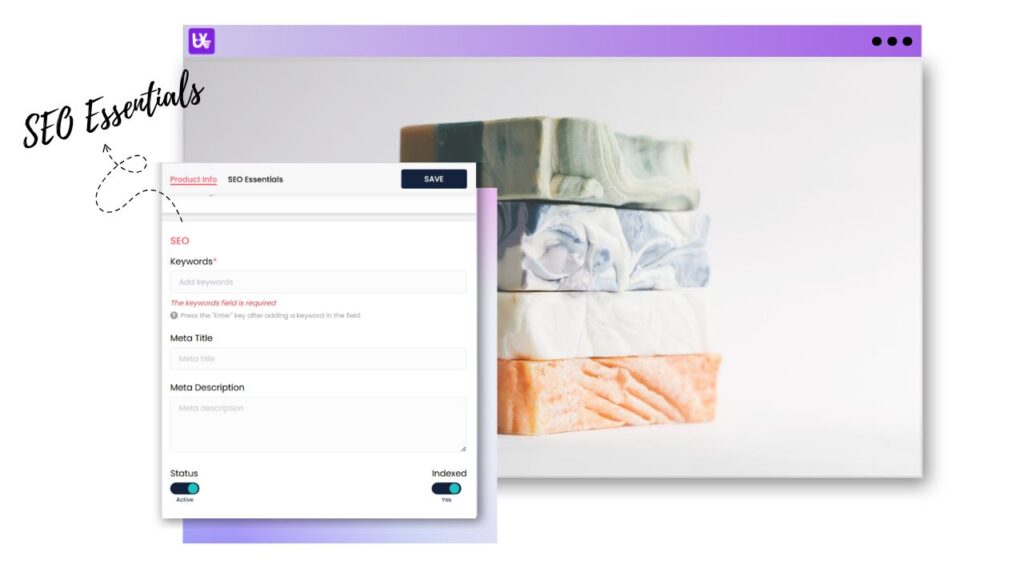
Here’s how to approach SEO for your new store:
Write unique meta titles and descriptions for every page. Your homepage, collection pages, and product pages should each have a distinct title tag and meta description that includes relevant keywords naturally.
Use keywords in your product descriptions. Think about how your customers would search for what you’re selling. If you sell custom phone cases, phrases like “personalized phone case,” “custom iPhone case,” and “make your own phone case” should appear naturally in your copy.
Get your image alt text right. Every product image should have an alt tag that describes the image and includes a relevant keyword where it makes sense.
Build internal links. Link from your blog posts to your product pages and vice versa. YeetCommerce makes it easy to add a blog to your store, which is one of the most powerful long-term SEO investments you can make.
Step 8: Launch and Start Promoting
You’ve built it — now it’s time to get people there. Here are the most effective free and low-cost promotion strategies for a brand-new store.
Social media. Start with one or two platforms where your target customers spend time. Consistency matters more than volume. Three solid posts per week beats seven mediocre ones.
Content marketing. Use the built-in blog on your YeetCommerce store to write helpful articles that your potential customers are searching for. Over time, this drives compounding organic traffic.
Email marketing. Collect email addresses from day one. Even if you start with a list of ten people, those are ten real potential customers. Offer a small incentive — a discount, a free guide, exclusive early access — in exchange for an email address.
Word of mouth. Tell people. Friends, family, relevant online communities, local groups. Don’t underestimate the power of your immediate network as a launchpad.
Marketplaces as a supplement. Listing on Etsy, Amazon, or eBay alongside your own store can bring additional visibility, though your YeetCommerce store should be your primary home base.
Common Mistakes to Avoid When Starting a Free Online Store
Waiting until everything is “perfect.” Perfection is the enemy of progress. A live, imperfect store beats a perfect store that never launches.
Ignoring mobile optimization. Test your store on your phone before you launch. Then test it again every time you make a significant change.
Underpricing. New sellers often price too low out of fear. Don’t undervalue your work. Price for sustainability.
Skipping the return policy. Have a clear, fair return policy visible on your store. It builds trust even if customers never actually use it.
Giving up too soon. Most successful stores take 3–6 months to find their footing. Consistency, iteration, and learning from data are what separate stores that make it from those that don’t.
Why YeetCommerce Is the Best Free Platform to Start With in 2026
There’s no shortage of e-commerce platforms out there. But when you’re learning how to start a free online store, what you need most is a platform that doesn’t nickel-and-dime you, doesn’t bury essential features behind paywalls, and doesn’t overwhelm you with complexity before you’ve made your first sale.
YeetCommerce was built with exactly that in mind. The free plan gives you real tools — a proper storefront, checkout, payments, and product management — not a stripped-down demo. The interface is clean and intuitive. And as your store grows, YeetCommerce scales with you.
Whether you’re selling your first product or your hundredth, starting with YeetCommerce means starting right.
Final Thoughts: Your Free Online Store Starts Today
The best time to start was yesterday. The second best time is right now.
You now have everything you need to know about how to start a free online store — from signing up and choosing a theme to adding products, setting up payments, and driving your first traffic. None of it requires technical expertise, a big budget, or years of experience.
All it requires is the decision to start.
Get started with YeetCommerce for free today →
Ready to take your store to the next level? Check out our guides on writing product descriptions that convert, setting up email marketing from scratch, and driving free traffic with SEO